Robert Burns and Burns Night (2)

Having written the earlier post about Burns Night (Burns Night Part 1), I realised that I had not explored the surname more fully. I don’t have time to create a significant post, but did want to share a few things with you, as I was quite surprised.

I headed to Forebears.io and looked at the distribution of the surname BURNS for 1881 – direct link to the data HERE

Distribution Map from Forebears.io for 1881 – Surname of BURNS


Place Incidence Frequency Rank in Area
England 13,287 1:1,835 242
Scotland 6,563 1:570 89
Wales 323 1:4,856 334
Isle of Man 27 1:2,010 260
Guernsey 11 1:2,969 521
Jersey 1 1:51,882 3,898

The map shows that in 1881 there were no instances of the surname anywhere but the United Kingdom. There are some anomalies here.

The data does refers to Great Britain which is England, Wales and Scotland. Isle of Man, Jersey and Guernsey are not the part of Great Britain or the UK, but they are Crown Dependencies.

The results show there were more that double instances of England than in Scotland.

There is some data for 1880, which is only for the United States, but if you look at the distribution map and click the actual map, it does populate each state – Check this out HERE

The site also provides some data for 1901, with only Ireland being shown. At this point, Ireland was one country.

Place Incidence Frequency Rank in Area
Ireland 7,394 1:599 86

There is no further historical data, what is available from the site is relative to the Census data. As you might expect by 2014, which is the other date that provides data, the distribution map shows the surname is more widespread.

Distribution Map from Forebears.io for 2014 – Surname of BURNS

The data for 2014 shows the distribution across the most incidences for the top 10 locations, and you can click the link to see more data

Place Incidence Frequency Rank in Area
United States 221,560 1:1,636 131
England 34,808 1:1,601 179
Australia 23,318 1:1,158 117
Canada 17,125 1:2,152 236
Scotland 11,211 1:478 55
Northern Ireland 4,752 1:388 33
Ireland 4,304 1:1,094 218
New Zealand 2,845 1:1,592 196
South Africa 2,562 1:21,147 2,680
Wales 1,326 1:2,334 254

Looking at surname distribution is one of the elements of the Introduction to One-Name Studies course – The latest course has just started, but if you click the link above you can be added to the list for information on the next start date.

Posted in Miscellaneous | Leave a comment

Robert Burns and Burns Night (3)

This post concludes the mini series of Robert Burns and Burns Night – Part 1 and Part 2

I couldn’t write about Burns Night, or a Scottish surname without writing about Clans and Tartans, even if it is in a limited way. Upon searching the site, Clans.com for the surname BURNS, it revealed 11 such tartans. Each tartan subsequently identified three different pallets – Reproduction, Modern and Ancient. Upon selecting one of the Tartans, Robert Burns Legacy (Robert ‘Rabbie’ Burns) Tartan you can see the slight variation to the colour in the image below.

Screen capture of Robert Burns Legacy Tartan, courtesy of the Clans.com website – accessed 25 Jan 2024

The Scottish Register for Tartans recorded 14 results when I searched the site for BURNS, and you can see those results HERE.

The subject of Tartans, Clans and Septs is an interesting one and I will write about those in the coming months.

Posted in Miscellaneous, Tartans & Clans | Leave a comment

Robert Burns and Burns Night (1)

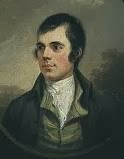
Robert Burns, 1759 – 1796

This is a rather long post, which I have split into three parts.

Across the globe, thousands of people with Scottish Heritage celebrate the birth of the Scottish Poet Robbie Burns on 25 January. The first Burns supper was hosted by the Burns Club on 29 January 1802 which was thought to be the poet’s birthday, however, a search of the Ayr parish records revealed that he was born on 25 January.

Traditionally there is a Burns Supper of Haggis, Neep and Tatties to celebrate the event.

The formal supper starts with a welcome and announcements then the Selkirk Grace.

Selkirk is one of the oldest towns in the Borders of Scotland. The Grace itself is a prayer and said before a meal. Here is the prayer in both Scottish and English translation:

Some hae meat and canna eat,
And some wad eat that want it,
But we hae meat and we can eat,
Sae let the Lord be thankit.

Some have food and cannot eat,
And some would eat that lack it,
But we have food and we can eat,
So let God be thanked.

After the Grace everyone stands as the Haggis is carried into the room to the sound of bagpipes. The Haggis is laid at the hosts table and then there is the cutting of the Haggis and the famous poem “Address to a Haggis” is read.

Fair fa’ your honest, sonsie face,
Great chieftain o’ the puddin-race!
Aboon them a’ ye tak your place,
Painch, tripe, or thairm:
Weel are ye wordy o’ a grace
As lang’s my arm.

The groaning trencher there ye fill,
Your hurdies like a distant hill,
Your pin wad help to mend a mill
In time o’ need,
While thro’ your pores the dews distil
Like amber bead.

His knife see rustic Labour dicht,
An’ cut you up wi’ ready slicht,
Trenching your gushing entrails bricht,
Like ony ditch;
And then, O what a glorious sicht,
Warm-reekin, rich!

Then, horn for horn, they stretch an’ strive:
Deil tak the hindmaist! on they drive,
Till a’ their weel-swall’d kytes belyve,
Are bent like drums;
Then auld Guidman, maist like to rive,
“Bethankit” hums.

Is there that o’re his French ragout
Or olio that wad staw a sow,
Or fricassee wad mak her spew
Wi’ perfect scunner,
Looks down wi’ sneering, scornfu’ view
On sic a dinner?

Poor devil! see him ower his trash,
As feckless as a wither’d rash,
His spindle shank, a guid whip-lash,
His nieve a nit;
Thro’ bloody flood or field to dash,
O how unfit!

But mark the Rustic, haggis fed,
The trembling earth resounds his tread.
Clap in his wallie nieve a blade,
He’ll mak it whistle;
An’ legs an’ arms, an’ heads will sned,
Like taps o’ thristle.

Ye Pow’rs wha mak mankind your care,
And dish them out their bill o’ fare,
Auld Scotland wants nae skinkin ware
That jaups in luggies;
But, if ye wish her gratefu’ prayer,

Gie her a haggis!

At the end of the poem there is a whisky toast to the Haggis. Then the meal is consumed.

The meal itself is Haggis served with mashed potato known as tatties and mashed neep which are turnip if you are in Scotland or Suede if you are south of the border!

When the meal reaches the coffee stage there is a toast to the Monarch . After the meal an “Immortal Memory” takes place. This is usually a speech on the life and poetry works of Robert Burns and the evening concludes with the singing of Auld Lang Syne.

Should auld acquaintance be forgot,
and never brought to mind ?
Should auld acquaintance be forgot,
and auld lang syne* ?

CHORUS: 
For auld lang syne, 
my jo, for auld lang syne, 
we’ll tak a cup o’ kindness yet, 
for auld lang syne.

And surely ye’ll be your pint-stowp !
and surely I’ll be mine !
And we’ll tak a cup o’ kindness yet,
for auld lang syne.

CHORUS

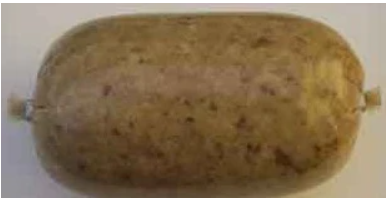
Ready cooked Haggis

Haggis can be found in most super markets here in the UK. They are usually found on the fresh meat counters and can be frozen. I routinely have at least two in the freezer. They do need defrosting before cooking.

Haggis can be cooked in a variety of ways

  1. Haggis can be cooked on the hob, in a pan of boiled water. As soon as the water boils reduce the heat and add the Haggis, with the water simmering it takes around an hour.
  2. Haggis can also be cooked in the oven, remove from the plastic casing and wrap in tin foil. Place the Haggis into an oven proof dish with a little water and cook, usually for around an hour.
  3. Haggis can also be cooked via the microwave, I usually remove the outer plastic and skin, and don’t forget the metal clips at the ends! Cut the Haggis into small segments and cook on full power. Length of time will vary depending on your microwave.

Haggis Pie

Cook Suede and Potatoes
Haggis cooked for about 3 minutes in the microwave (mine is 900w)
Cut Haggis into sections and place in bottom of a dish, I use a Lasagne dish
Mash Suede and place on top of Haggis
Mash potato and place on top of Suede.
Place in Oven for (mine is fan assisted) so 20 minutes until nice and brown.

Wee Beestie!

Cook Haggis and break into bits with a fork.
Serve on a bed of mashed potato and mashed suede (neep)
cover with cheese sauce and a light dusting of black pepper to taste

Haggis is available in most supermarkets in the UK, either as fresh, or in some cases tinned – our preference is for the fresh.

For those residing in Scotland there is ready meal of Haggis, Tattie and Neep available all year round, they even make a larger portion for the big night itself. We can vouch for the ready meal, and no trip to Scotland is complete until we have picked up some to bring home!

Posted in Miscellaneous | Leave a comment

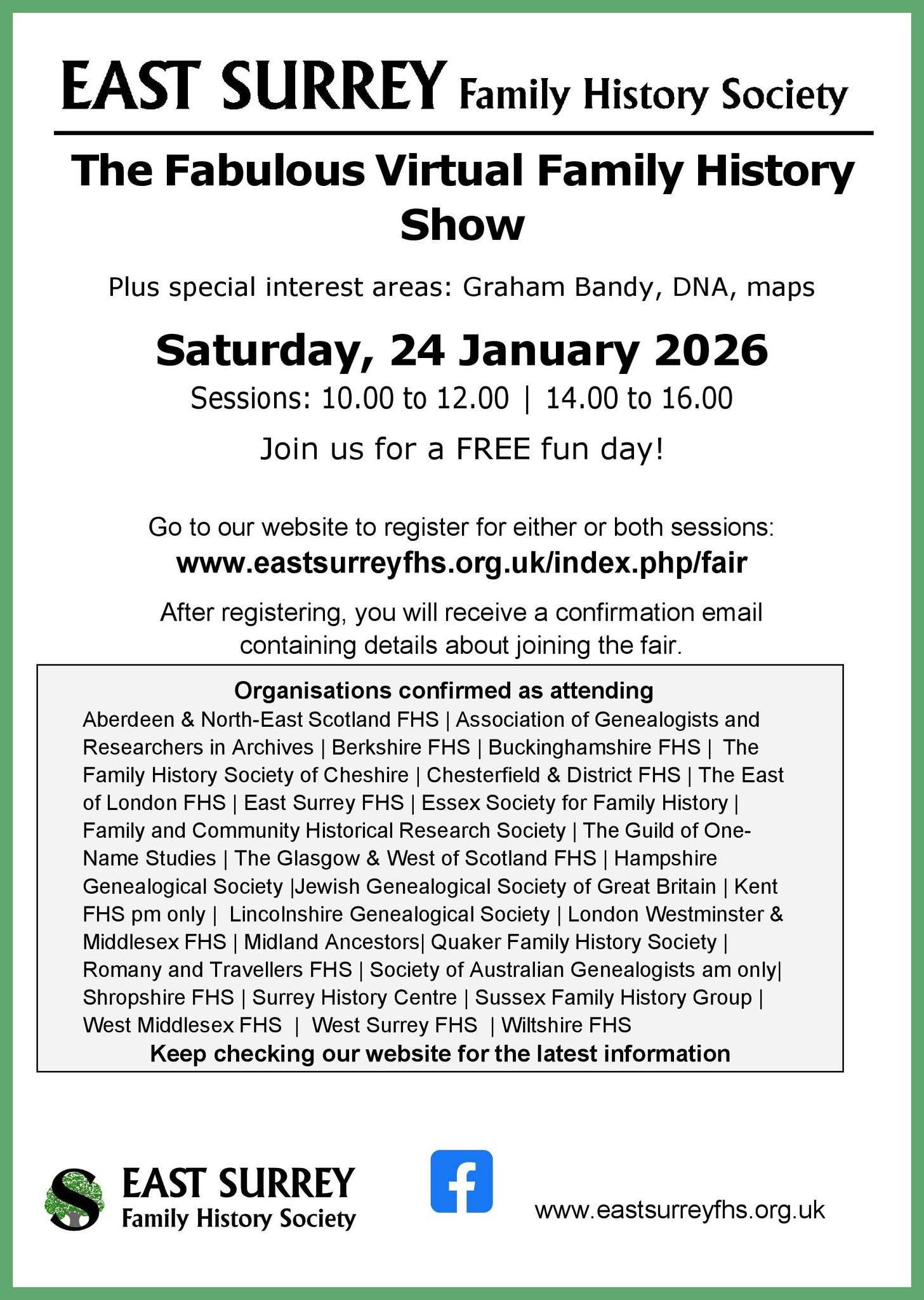
Fabulous Virtual Family History Show – Hosted by East Surrey FHS

The Guild of One-Name Studies will be at the virtual stand at this event hosted by East Surrey FHS. If you are curious about One-Name Studies, or surname research, please drop by and see us. FREE to attend, but you do need to register, to do so visit the East Surrey FHS 

Copyright East Surrey FHS & Guild of ONS 2026

Posted in Genealogy, Miscellaneous | Leave a comment

Introduction to One-Name Studies Course (901)

Copyright  – Julie Goucher, 2018

Remarkably, researching surnames is seen as a very niche topic, despite the vast majority of people having one (FN1).

Our individual family histories are littered with surnames. Hopefully all different ones, though if your ancestors like my maternal line, they lived within the same 30 mile radius for 300 years, crossing the borders of Surrey, Sussex and Hampshire. As a consequence I have multiple occurrences of the same surname, nearly all of which do connect, even if a generation back, or individuals to the side of my direct ancestors.

The Introduction to One-Name Studies course is as you might expect, an introduction. It introduces students to consider each surname of their individual choosing, looking at the elements of Origins, size of a study, organising a study and considerations of software use and so forth. If you are interested, then look no further, as the Introduction course starts today, Monday 19 January, and there are a few spots left.

Members of the Guild of One-Name Studies can avail themselves of a discount, the code is to be found in the members area here (members ensure you are logged in), whilst non-members who have purchased the course receive complimentary membership for the first year, subject to completing the online form, the link to which is provided within the Pharos forum.

For more information and to sign up visit the Pharos website.

FN1 – the country which does not use surnames is Iceland.

Posted in Introduction to One-Name Studies (Pharos course 901), One-Name Studies | Leave a comment

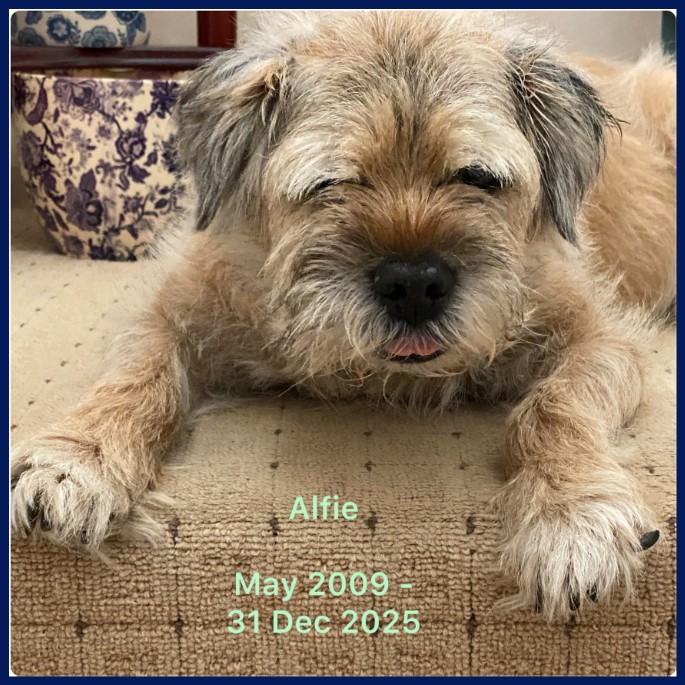
Alfie, Border Terrier, May 2009 – 31 Dec 2025

© Julie Goucher, October 2022

2011, and we were about to board a ferry to the Isle of Bute. There was a phone call; a rescue Border Terrier that needed to be re-homed. As soon as we were back we went to see the BT. There we saw a very sad Stanley aged two. I was sceptical, what would the little one be like? was he coming with history?

We could not leave him there, his little face looking at us, so he came home with us on 22 July 2011. We wanted to put his sad life behind him, and gave him a name change, to Alfie. He settled in, he quickly mastered the point of squeaky dog toys, chews & treats.

The last 18 months have been a challenge, problems with his liver but we elected him to bring him home and enjoy what time we had, as long as he was doing ok. We saw the vet frequently. That time ran out today, when we made the decision to say a final farewell to Alfie, who was 18 1/2, by far the oldest BT the vet had seen.

Alfie was a loyal little thing. He preferred Stuart to me, he loved sleeping, exploring, eating cheese & even steak. He followed us around, knew when it was time for a walk. He was loved & loved us back.

Alfie, you are very missed.
May 2009 – 31 Dec 2025

© Julie Goucher, October 2022

Posted in Miscellaneous | 2 Comments

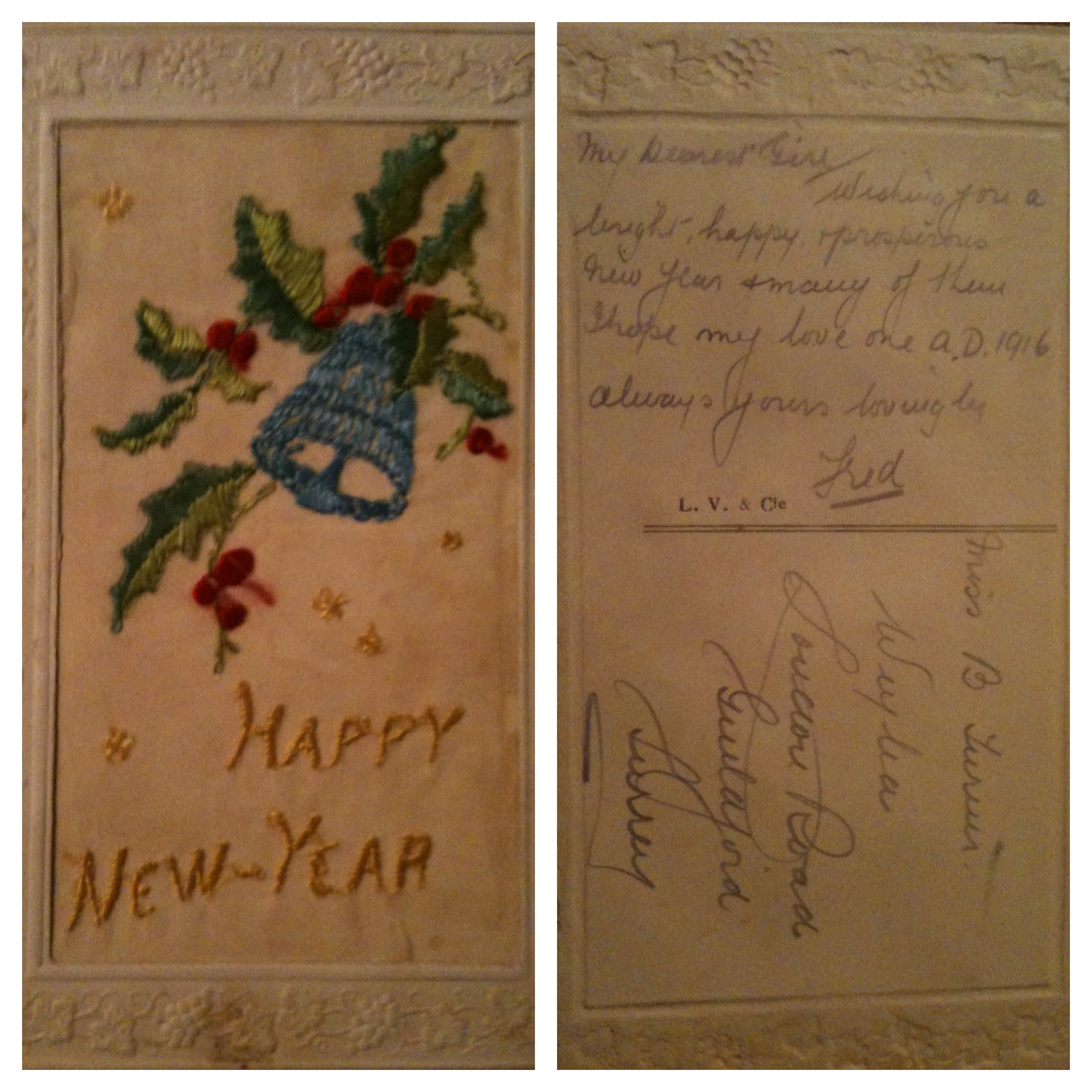
Happy New Year – 2026!

Image from Julie Goucher personal collection

Purchased for my Guildford & District Collection, this was sent from Frederick Wait whilst he was serving from the Front in 1916.

So, Who was Fred?…..

A search of the Marriages for a B Turner in Guildford 1916+ to a Fred revealed one such entry. The marriage of Bertha A Turner to Frederick W Wait in the September Quarter of 1917 at Guildford. (Ref 2a, 201).

Working backwards to the 1911 Census. Did that reveal more of Bertha? The index revealed one entry for a Bertha E Turner. I took a chance and looked at the data. It didn’t pay off, and revealed a Bertha Elizabeth Turner residing at 144 Walnut Tree Close Guildford, not far from the childhood home of my Grandmother who grew up at number 114, though my Grandmother wasn’t born until December 1912 – Isn’t research curious?.

Anyway, A quick look through the First World War records didn’t prove obviously helpful, neither did the Commonwealth War Graves website. So I still didn’t know who Fred was. A quick search of the 1911 Census for him and I was surprised. It revealed one entry; just one.

Frederick William Wait, Single and aged 20 years born 1891 Guildford. On overseas military duty and recorded as in the 7th Dragoon Guards and stationed at Hislop Barracks, Trimulgherry, Duccan, India. Not what I had expected, but I do know that regiments based in India, and elsewhere across the Empire were sent to fight in France, for King and country.

Now, I have not looked more into Frederick Wait since I originally wrote the majority of the text in 2011. There is still more to explore about Fred and his life after the postcard was sent to Bertha Turner.

I don’t descend from Fred and/or Bertha, but would like to find out more about the couple and perhaps return the postcard to the family. If you descend from the couple please drop me a note. Below is a larger version of the image for easier reading!

Image from Julie Goucher personal collection

Posted in Genealogy, Guildford & District ~ A Pictorial Archive, Guildford, Surrey, England | 1 Comment

Festivities of the Season

Merry Christmas image – from the collection of Julie Goucher, 2021

However you spend the season, I hope you enjoy it whatever you are doing. Perhaps with friends, family and perhaps a little genealogy too.

Posted in Advent Posts, Archive - Imported from Blogger | Leave a comment

(Advent 22) – Variants

Created Julie Goucher using word cloud

The topic of variants and deviants is addressed in detail during the Introduction to One-Name Studies course. Essentially we have likely all come across variants and deviants to our surnames, even if we have not called them that.

Variants

For the purposes of my own One-Name Studies I have registered two variants for ORLANDO, these are ORLANDE and ORLANDA. For my BUTCHER study I registered just one, BUTCHERS. It is also worth pointing out that you do not need to register a variant and at the initial point of registering the surname Butcher I did not register a variant. I did so when I came across a divorce record in the name of Butchers in which the male stated that his name was Butcher and not Butchers.

When looking at my husband’s ancestry his early Goucher ancestors were recorded as Goacher. The Goucher surname was listed as a variant in the Goacher One-Name Study when it was registered by another member of the Guild of One-Name Studies. When the study was deregistered, following the death of the registrant, my husband registered the surname and listed Goacher as a variant. He also added several other variants, one of which is the topic of a forthcoming post.

Deviants

A deviant is a change of surname that happens inconsistently. In the case of the 1939 Register, my husband’s Grandmother, was recorded as GROUCHER.

Why do variants exist?

Accents, spelling and people writing what they think they hear rather than what they actually do – Goucher is a case in point and I regularly receive correspondence in the name of Goucher and Groucher. In a letter recently, I was referred to as Goucher and Goacher, within the same sentence and that is not all, the envelope was handwritten and addressed to Mrs Groucher!

In a time when not everyone could read and write it was very easy for the inconsistencies with the spelling to exist because the person writing the surname would not be corrected if the person could not read what was written down.

Those with “foreign” surnames might change their surname, to make themselves fit in more and I gave an example recently. Surnames that have spellings that are not familiar in one country might become changed over time, just to be easier to manage.

You might find this page on the Guild of One-Name Studies website useful as you consider your own surnames and their potential variants. Those of you who read this earlier post might find it useful to read it again and consider the potential variant I discovered. I will at some point write about this again and my hypothesis about this.

Posted in Advent Posts, Genealogy, One-Name Studies | 2 Comments

(Advent 19) – Software

Created by Julie Goucher, using word cloud, 2020

This continues the process from Advent 17, where I talked about how to create the database. This post is about where to put the database – which genealogy software?

The most frequently used software by those with One-Name Studies, and many other projects are these (listed in alphabetical order).

  • Family Historian
  • Family Tree Maker
  • Legacy
  • Roots Magic

The first software listed is very much used by researchers in the UK, the others are US focused. The reality is regardless where you are living, and where your research is centred, the most important factor in software is which one do you find the most intuitive to use? If you have taken a Pharos course with me, then you will have likely heard my story with software.

In short, I used Family Origins starting with version 4 and updating to the final version, number 10. I then switched to Roots Magic. The relationship I had with the software up to this point was a love-hate relationship. It worked, doing just what I set out in the Advent 17 post, but there was something that was not intuitive to me, and I could not put my finger on what the something was. Over the years I had taken trials with Family Historian and I could not get to grips with it, no idea why that was the case.

Then Family Historian released version 7, I was drawn to take another trial, which I did. I have no idea what happened, only that I began to feel more in tune with Family Historian. I purchased the software and purchased the manual which focuses on version 6, but if I got stuck then I prefer to be able to open a book to find the answer, rather than trawl through help in the program itself. 

I then extracted the Gedcom from Roots Magic and imported it into Family Historian. There was no issues with the data transfer, but I did, and still need to do some sorting with data, sources and repositories within the program.

We do explore software as part of the Introduction to One-Name Studies course, and more so in the Practicalities of a One-Name Studies course. The important message though is this – take the time to explore the software, create a test database, add a source and some basic data. Don’t take hours adding information at this point, instead spend the time on checking the functionality of the software. Does it feel comfortable to use?  Is entering data feeling like a hassle or a joy? Whilst you won’t spend enormous amounts of time entering endless data into your software, what time you do invest in your study needs to be spent wisely and with ease.

There is other software out there, and I would suggest think about the following:

  • What are the aims of your study?
    • If you want to have a Guild hosted website for your registered study and to use TNG then using software that does not enable you to meet those aims might not be a good idea.
  • Does the software produce a Gedcom?
  • Is the software available to purchase or free?
  • Consider the longevity of free software?
  • Is the software maintained by the developer?
    • Update to the latest version to keep your program in tip-top order

In the Pharos courses we discuss these things and more.

Posted in Advent Posts | Leave a comment